As we prepare for the Japanese Festival, which will be held over three days starting from August 30, we had not had many opportunities to practice okuden (advanced-level) temae. However, by adjusting our schedules, we were able to practice the Gyō no Gyō daisu Furo-demae for students of advanced level and above.
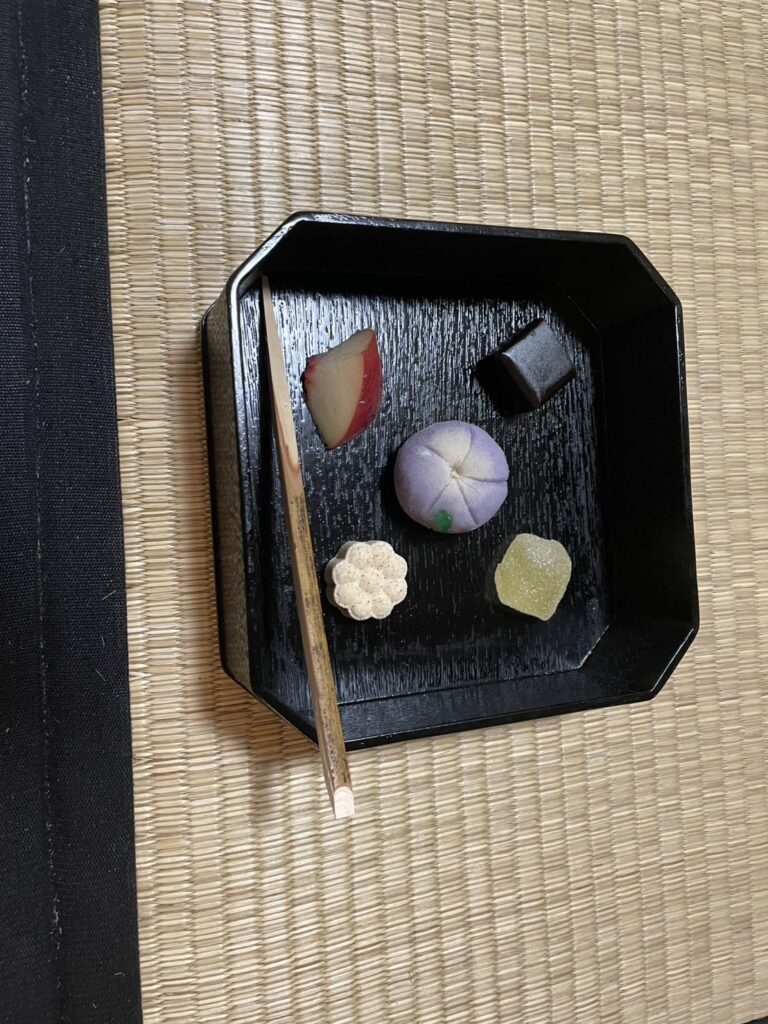
Five types of sweets were arranged and served in a Fuchi-daka (tiered lacquered container).
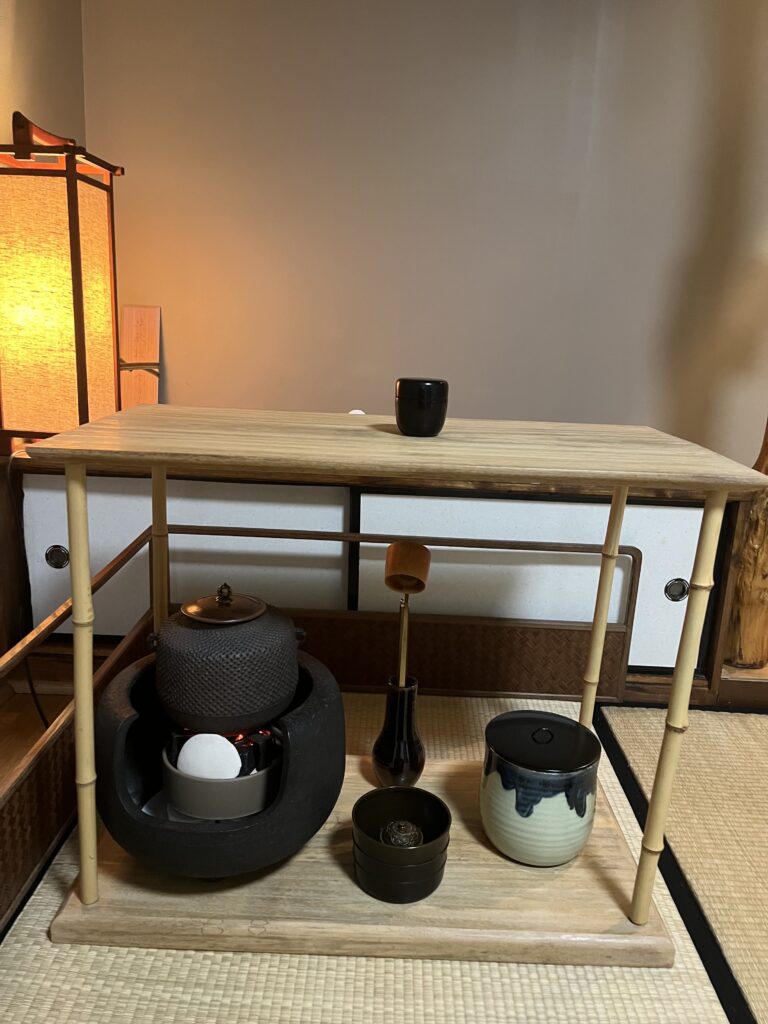
On the lower board (jiita) of the gyōdaisu (semi-formal utensil stand), the furo (portable brazier), a shakutate (ladle stand) holding the hibashi (metal chopsticks for handling charcoal) and sashidōshi hishaku (a special ladle), and a mizusashi (fresh water container) with a lacquered lid were placed.
On the upper board (tenban), a black natsume was arranged in the center.
preparation
-
Place the karamono chaire (Chinese-style thick tea container) in the center of the Hakke-bon (octagonal tray), proceed to the front of the daisu, remove the black natsume, place it on the left side of the tray, and then set the Hakke-bon (now holding only the chaire) onto the upper board.
Withdraw while carrying the natsume. -
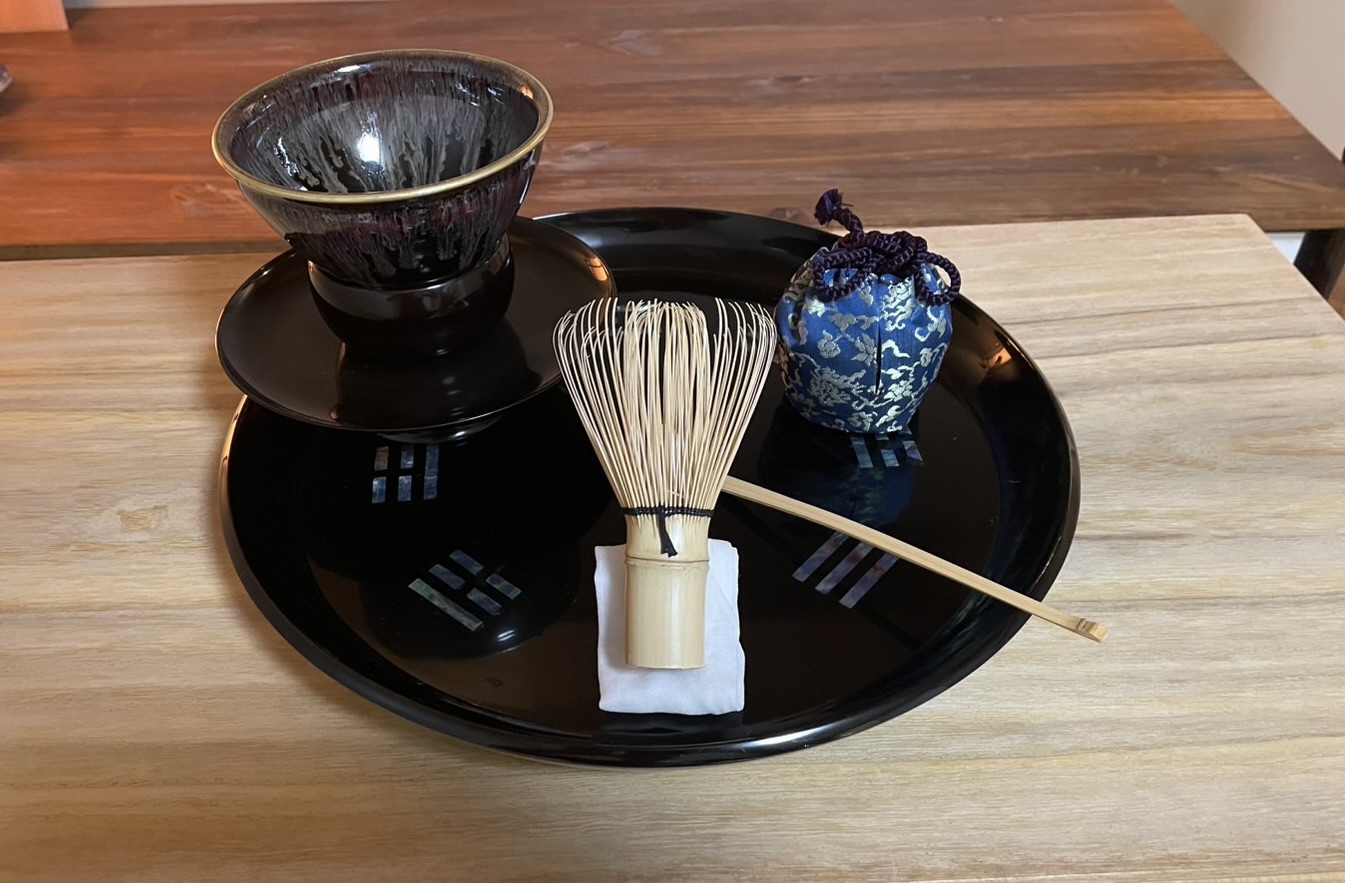
Place the tenmoku chawan (conical tea bowl) prepared with chakin , motobushi chashaku (tea scoop with a end node), and chasen on the tenmoku-dai (bowl stand).
Bring it to the front of the stand, and place the chaire on the east side (corresponding to the “Zhen” trigram), the chashaku to the southeast (Wind), the chakin to the south (Fire), and lay the chasen on the chakin. The tenmoku-dai is placed in the west (Lake) position.
Even just observing this placement conveys the sense of a purification ritual meant to calm the anger of the heavens.
When the temae begins, the teishu (host) proceeds to the front of the stand using shikkō (kneeling forward), and when withdrawing, performs shittai (kneeling retreat).
This is said to be rooted in the belief that a deity resides around the ladle placed in the shakutate, and thus lowering one’s head is a gesture of reverence to that divine presence.
Practicing okuden always instills a sense of solemnity and reverence.